

Independent Dutch Thinker Edouard Prisse Warns the West Still Misunderstands China Trade
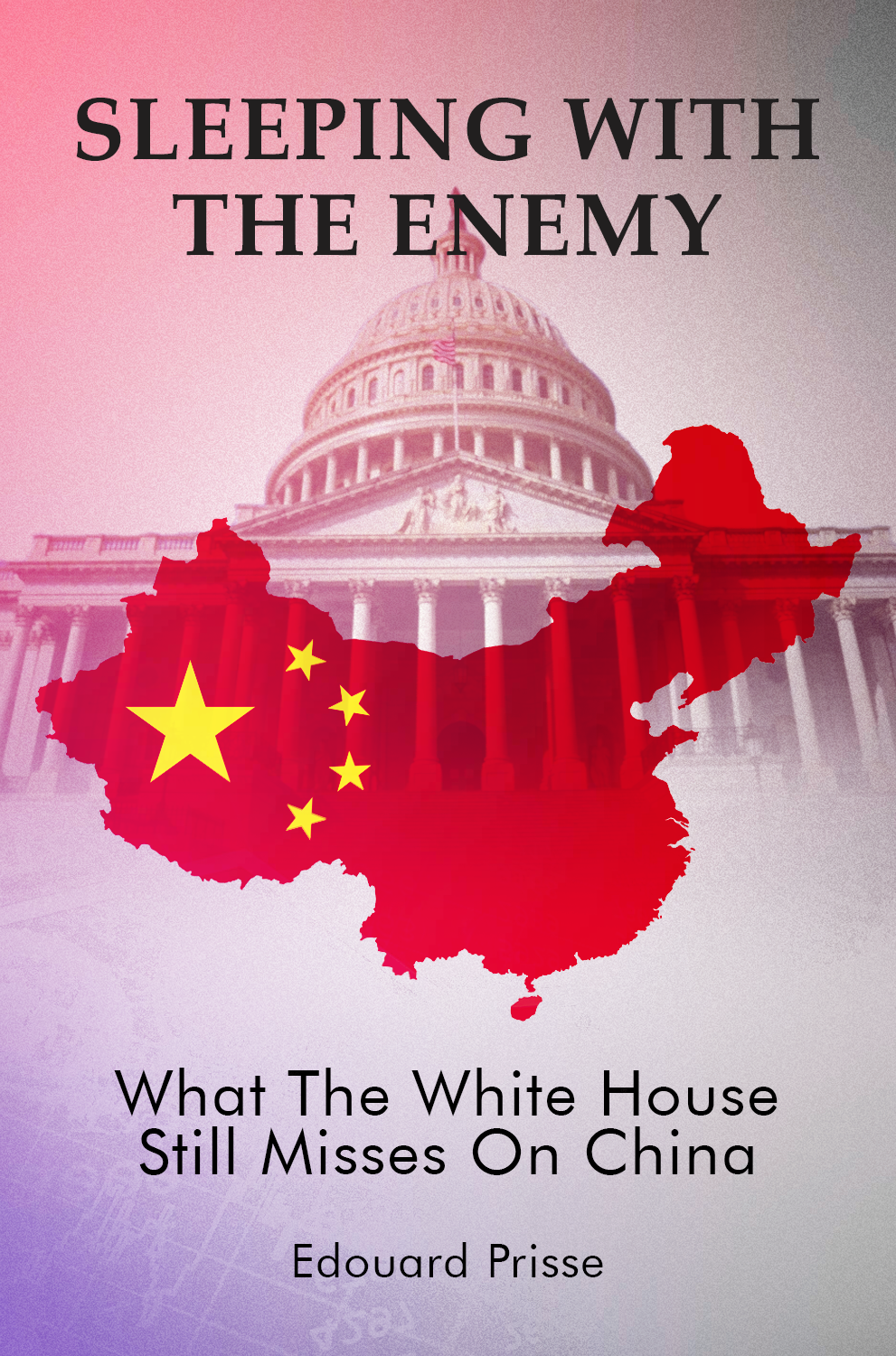
Sleeping With the Enemy: What the White House Still Misses on China by Edouard Prisse

Author Edouard Prisse
A new book argues U.S. free trade with China was a historic policy error and proposes a six-month plan to rebuild American industry.
Free trade with China was started in 2001 based on erroneous arguments and a total misreading of the inevitable consequences.”
LOS ANGELES, CA, UNITED STATES, March 31, 2026 /EINPresswire.com/ -- For more than two decades, the economic relationship between the United States and China has shaped global politics. Yet a basic question still hangs over the debate: how did the United States help create an economic arrangement that now strengthens its chief geopolitical rival?— Edouard Prisse
In "Sleeping With the Enemy: What the White House Still Misses on China," Dutch macroeconomist and political thinker Edouard Prisse examines the origins of that relationship and argues that it rests on a major strategic mistake. The book revisits the decision around the year 2000 to open the American economy fully to Chinese exports and to support China’s entry into the global trading system. At the time, policymakers believed that economic integration would benefit American industry while encouraging China to evolve in a more liberal direction.
Prisse contends that the expectations behind that policy were fundamentally flawed. The book argues that the economic conditions inside China made the outcome predictable from the beginning. Hundreds of millions of low-paid workers were ready to enter the country’s manufacturing sector. At the same time, China maintained a centralized political system that could hold wages low while directing industrial expansion. Once those conditions were connected to Western markets, the result was a powerful surge in Chinese production and export capacity.
The consequences of that decision are still unfolding. Across the United States and Europe, manufacturing sectors have faced growing pressure from goods produced at prices that domestic industries cannot match. Meanwhile China’s economic strength has expanded at a pace few Western analysts anticipated at the start of the century. Prisse argues that the policy choices made at the beginning of the century created the structural imbalance that now defines the global trading system.
The book also addresses a series of arguments frequently used to dismiss concerns about China’s economic rise. Some analysts point to the country’s debt levels or weaknesses in its banking sector. Others expect slowing growth or demographic change to curb its influence. Prisse argues that these weaknesses do not alter the core dynamic created by export-driven enrichment. As long as Western markets continue to absorb Chinese production at scale, the financial resources generated by that trade will continue to strengthen Beijing’s position.
At the center of the book is a proposal intended to change that trajectory. Prisse outlines a policy framework he calls the “Six-Month Moratorium.” The concept is simple. The United States would announce that large-scale free trade with China will end after a six-month transition period. During that window, companies would reorganize supply chains, invest in domestic production, and secure alternative suppliers where necessary.
Prisse argues that businesses adapt quickly when the rules of trade change. He also acknowledges that the transition would involve higher prices and a short economic slowdown. In his view, the long-term result would be the rebuilding of industrial capacity and a restoration of economic balance between democratic nations and China.
"Sleeping With the Enemy" presents a forceful argument that the present trade relationship is the outcome of policy decisions made a generation ago, not an unavoidable feature of globalization, and that these decisions can still be corrected.
ABOUT THE AUTHOR
Edouard Prisse is a fully independent thinker and author, mathematically, legally, and business school trained. He is the author of many articles about the danger of China to the West. He is also author of the books "China Takes Over," "Is China Taking Over," "We Were Funding China’s Growth," and "Sleeping With the Enemy: What the White House Still Misses on China."
Nanda Dyssou
Coriolis
+1 424-226-6148
email us here
Visit us on social media:
LinkedIn
Instagram
Facebook
X
Legal Disclaimer:
EIN Presswire provides this news content "as is" without warranty of any kind. We do not accept any responsibility or liability for the accuracy, content, images, videos, licenses, completeness, legality, or reliability of the information contained in this article. If you have any complaints or copyright issues related to this article, kindly contact the author above.
