

Informing on business and economy news in the Netherlands
Provided by AGP
Whey Protein Manufacturing Plant Setup, Feasibility Study, ROI Analysis and Business Plan Consultant
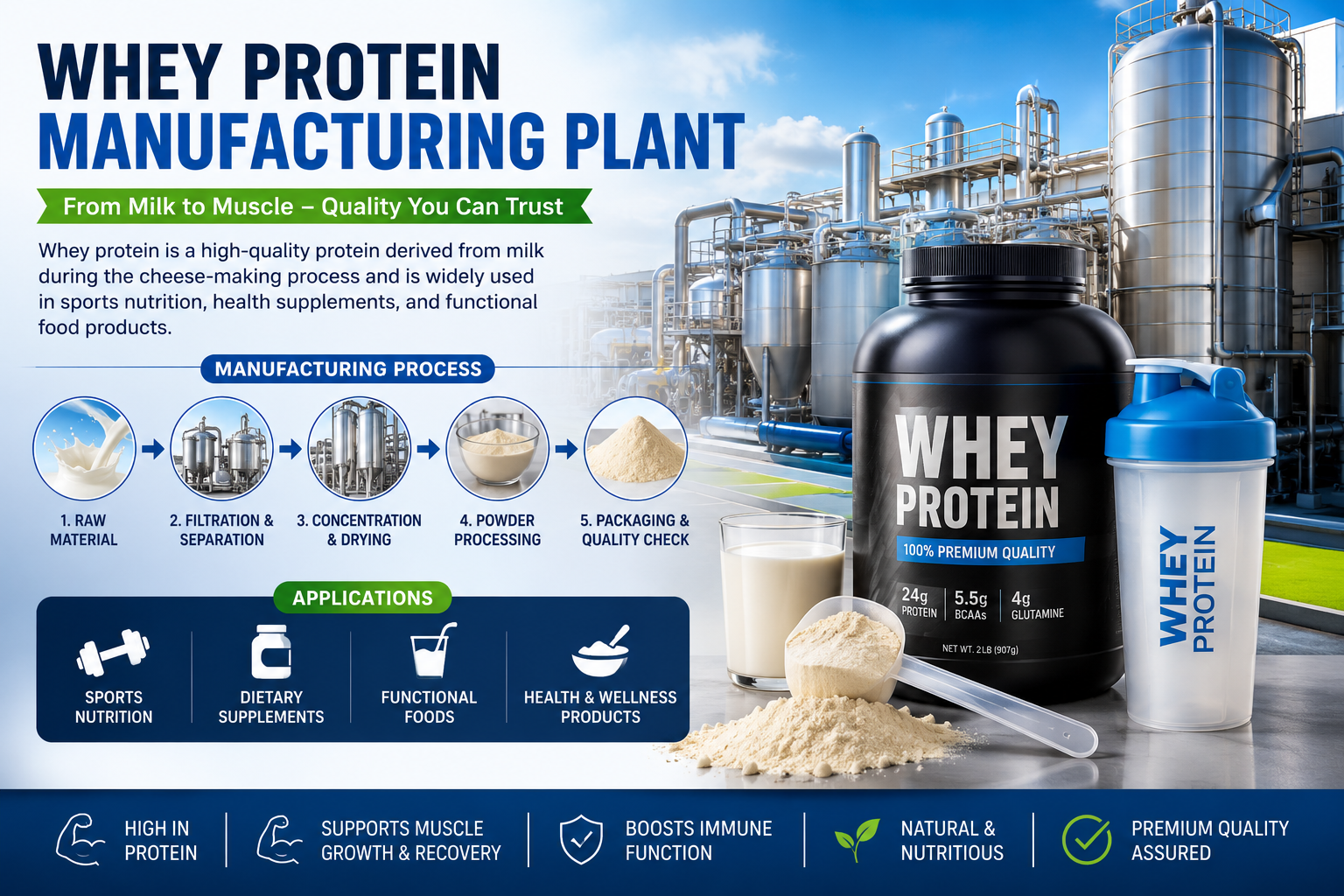
Whey Protein Manufacturing Plant
A Detailed DPR Covering CapEx, OpEx, Ultrafiltration and Spray Drying Process, ROI & the Growing Global Opportunity in Sports Nutrition, Functional Food
BROOKLYN, NY, UNITED STATES, May 19, 2026 /EINPresswire.com/ -- Setting up a whey protein manufacturing plant converts one of dairy’s most underutilised by-products into one of its highest-margin outputs. Liquid whey - the by-product of cheese and paneer production - is generated in enormous volumes across India’s dairy sector and is routinely discharged or sold at negligible value. A whey protein manufacturing plant captures this stream and transforms it, through ultrafiltration and spray drying, into WPC, WPI, and hydrolysed whey protein products that command premium pricing across sports nutrition, infant formula, clinical nutrition, and functional food applications. India currently produces less than 20% of its national whey protein requirement domestically, importing the remainder at a cost that rises every year.IMARC Group’s Whey Protein Manufacturing Plant Project Report is a complete DPR and whey protein manufacturing feasibility study for dairy processors, investors, and nutrition entrepreneurs. It covers the full WPC manufacturing plant setup - from liquid whey intake and pasteurisation through ultrafiltration, diafiltration, concentration, and spray drying - with complete whey protein plant CapEx and OpEx modelling and 10-year financial projections.
𝐑𝐞𝐪𝐮𝐞𝐬𝐭 𝐟𝐨𝐫 𝐚 𝐒𝐚𝐦𝐩𝐥𝐞 𝐑𝐞𝐩𝐨𝐫𝐭: https://www.imarcgroup.com/whey-protein-manufacturing-plant-project-report/requestsample
𝐈𝐧𝐯𝐞𝐬𝐭𝐦𝐞𝐧𝐭 𝐃𝐫𝐢𝐯𝐞𝐫𝐬 𝐚𝐧𝐝 𝐌𝐚𝐫𝐤𝐞𝐭 𝐎𝐩𝐩𝐨𝐫𝐭𝐮𝐧𝐢𝐭𝐲
Three forces are driving investment into whey protein production in India:
𝐒𝐭𝐫𝐮𝐜𝐭𝐮𝐫𝐚𝐥 𝐩𝐫𝐨𝐭𝐞𝐢𝐧 𝐝𝐞𝐟𝐢𝐜𝐢𝐭 𝐜𝐫𝐞𝐚𝐭𝐢𝐧𝐠 𝐜𝐚𝐩𝐭𝐢𝐯𝐞 𝐝𝐞𝐦𝐚𝐧𝐝: Studies indicate that 70–80% of Indians consume less protein than the recommended daily intake. As fitness culture, health awareness, and organised retail reach Tier-II and Tier-III cities, whey protein is transitioning from a niche gym supplement to a mainstream nutrition category. India is projected to import 23,000 MT of whey protein in 2025 alone - a 20% jump from 2024 -despite having the world’s largest milk production base. Every tonne imported is a domestic manufacturing opportunity that remains uncaptured.
𝐁𝐲-𝐩𝐫𝐨𝐝𝐮𝐜𝐭 𝐞𝐜𝐨𝐧𝐨𝐦𝐢𝐜𝐬 𝐦𝐚𝐤𝐢𝐧𝐠 𝐭𝐡𝐞 𝐫𝐚𝐰 𝐦𝐚𝐭𝐞𝐫𝐢𝐚𝐥 𝐜𝐚𝐬𝐞 𝐜𝐨𝐦𝐩𝐞𝐥𝐥𝐢𝐧𝐠: India’s dairy sector produces approximately 239 million tonnes of milk annually. A significant portion is processed into paneer and cheese, generating large volumes of liquid whey as a by-product. This whey is either discharged as effluent - creating an environmental liability - or sold at minimal value as animal feed. A dairy protein manufacturing plant co-located with or supplying from a cheese or paneer unit converts this disposal cost into a premium ingredient revenue stream. Raw material access at low cost is the structural advantage that domestic producers have over importers.
𝐏𝐋𝐈 𝐚𝐧𝐝 𝐩𝐨𝐥𝐢𝐜𝐲 𝐭𝐚𝐢𝐥𝐰𝐢𝐧𝐝𝐬 𝐬𝐮𝐩𝐩𝐨𝐫𝐭𝐢𝐧𝐠 𝐜𝐚𝐩𝐢𝐭𝐚𝐥 𝐢𝐧𝐯𝐞𝐬𝐭𝐦𝐞𝐧𝐭: India’s PLI scheme for food processing reimburses up to 50% of qualifying CapEx for dairy processing investments, directly reducing the whey protein plant setup cost for new entrants. The Fit India Movement, school nutrition programmes, and FSSAI’s 2025 directive on protein supplement labelling are building both demand and regulatory structure. Major domestic dairy players are already moving - Parag Milk Foods has established a dedicated whey processing facility targeting 15% of revenues from whey; Amul inaugurated a world-scale curd and fractionation facility in Kolkata in February 2025; and Godrej Agrovet commissioned an INR 150 crore membrane filtration dairy facility in Telangana in December 2025.
𝐖𝐡𝐞𝐲 𝐏𝐫𝐨𝐭𝐞𝐢𝐧 𝐓𝐲𝐩𝐞𝐬 𝐚𝐧𝐝 𝐏𝐫𝐨𝐝𝐮𝐜𝐭 𝐑𝐚𝐧𝐠𝐞
A whey protein production plant’s product range determines end markets, process configuration, and margin profile:
• 𝐖𝐡𝐞𝐲 𝐏𝐫𝐨𝐭𝐞𝐢𝐧 𝐂𝐨𝐧𝐜𝐞𝐧𝐭𝐫𝐚𝐭𝐞 𝐖𝐏𝐂35: Contains 35% protein by dry weight. The base-grade product, used in food manufacturing, bakery fortification, animal nutrition, and entry-level sports supplements. Lowest processing cost, highest volume. Primary output of a basic ultrafiltration-only WPC manufacturing plant.
• 𝐖𝐡𝐞𝐲 𝐏𝐫𝐨𝐭𝐞𝐢𝐧 𝐂𝐨𝐧𝐜𝐞𝐧𝐭𝐫𝐚𝐭𝐞 𝐖𝐏𝐂80: Contains 80% protein by dry weight. The standard sports nutrition ingredient used in protein powders, bars, and ready-to-drink products. Requires tighter ultrafiltration and diafiltration. Commands significant premium over WPC35. The dominant product for a sports nutrition-focused whey protein manufacturing plant.
• 𝐖𝐡𝐞𝐲 𝐏𝐫𝐨𝐭𝐞𝐢𝐧 𝐈𝐬𝐨𝐥𝐚𝐭𝐞 𝐖𝐏𝐈: Contains 90%+ protein with minimal lactose and fat. Premium product for lactose-intolerant consumers, high-performance athletes, and clinical nutrition applications. Requires ion exchange or advanced microfiltration in addition to ultrafiltration. Highest per-kilogram price. India currently imports the majority of WPI requirements.
• 𝐇𝐲𝐝𝐫𝐨𝐥𝐲𝐬𝐞𝐝 𝐖𝐡𝐞𝐲 𝐏𝐫𝐨𝐭𝐞𝐢𝐧 𝐇𝐖𝐏: Enzymatically pre-digested whey protein for rapid absorption. Used in infant formula, clinical recovery nutrition, and premium sports supplements. Requires enzymatic hydrolysis reactor downstream of UF/DF. Highest-margin whey protein isolate manufacturing plant output.
• 𝐖𝐡𝐞𝐲 𝐏𝐫𝐨𝐭𝐞𝐢𝐧 𝐟𝐨𝐫 𝐢𝐧𝐟𝐚𝐧𝐭 𝐟𝐨𝐫𝐦𝐮𝐥𝐚: Ultra-high-purity demineralised whey for infant nutrition. Requires additional demineralisation (electrodialysis or ion exchange) to reduce mineral content. Strict microbiological and compositional specifications. Largest-volume global whey application by value.
𝐖𝐡𝐞𝐲 𝐏𝐫𝐨𝐭𝐞𝐢𝐧 𝐌𝐚𝐧𝐮𝐟𝐚𝐜𝐭𝐮𝐫𝐢𝐧𝐠 𝐏𝐥𝐚𝐧𝐭 𝐅𝐞𝐚𝐬𝐢𝐛𝐢𝐥𝐢𝐭𝐲 𝐑𝐞𝐩𝐨𝐫𝐭: https://www.imarcgroup.com/whey-protein-manufacturing-plant-project-report
𝐇𝐨𝐰 𝐚 𝐖𝐡𝐞𝐲 𝐏𝐫𝐨𝐭𝐞𝐢𝐧 𝐌𝐚𝐧𝐮𝐟𝐚𝐜𝐭𝐮𝐫𝐢𝐧𝐠 𝐏𝐥𝐚𝐧𝐭 𝐖𝐨𝐫𝐤𝐬 - 𝐓𝐡𝐞 𝐔𝐥𝐭𝐫𝐚𝐟𝐢𝐥𝐭𝐫𝐚𝐭𝐢𝐨𝐧 𝐚𝐧𝐝 𝐒𝐩𝐫𝐚𝐲 𝐃𝐫𝐲𝐢𝐧𝐠 𝐏𝐫𝐨𝐜𝐞𝐬𝐬
Whey protein manufacturing is a membrane filtration and thermal drying process. The key operations separate protein from lactose, fat, minerals, and water to produce a concentrated, shelf-stable powder:
• 𝐋𝐢𝐪𝐮𝐢𝐝 𝐰𝐡𝐞𝐲 𝐢𝐧𝐭𝐚𝐤𝐞 𝐚𝐧𝐝 𝐭𝐞𝐬𝐭𝐢𝐧𝐠: Sweet whey from cheese production or acid whey from paneer and chhana is received, tested for protein content, pH, fat, and microbial load. Sweet whey (pH 6.0–6.5) is the preferred feedstock for WPC/WPI - acid whey requires neutralisation and additional processing
• 𝐏𝐚𝐬𝐭𝐞𝐮𝐫𝐢𝐬𝐚𝐭𝐢𝐨𝐧 𝐚𝐧𝐝 𝐜𝐥𝐚𝐫𝐢𝐟𝐢𝐜𝐚𝐭𝐢𝐨𝐧: Liquid whey is heat-treated (72°C for 15 seconds) to reduce microbial load. A centrifugal separator removes residual fat and curd fines. Clarified whey proceeds to membrane filtration
• 𝐔𝐥𝐭𝐫𝐚𝐟𝐢𝐥𝐭𝐫𝐚𝐭𝐢𝐨𝐧 (𝐔𝐅): Whey passes through UF membranes with 10,000–30,000 Da molecular weight cut-off. Protein is retained in the retentate; lactose, water, and minerals pass through as permeate. UF is the primary concentration step and the core unit operation of any whey protein manufacturing plant setup
• 𝐃𝐢𝐚𝐟𝐢𝐥𝐭𝐫𝐚𝐭𝐢𝐨𝐧 (𝐃𝐅): Fresh water is added to the UF retentate and re-filtered to wash out residual lactose and minerals, increasing protein concentration to WPC80 or WPI specification. DF cycles directly determine final protein purity and lactose content
• 𝐌𝐢𝐜𝐫𝐨𝐟𝐢𝐥𝐭𝐫𝐚𝐭𝐢𝐨𝐧 𝐨𝐫 𝐢𝐨𝐧 𝐞𝐱𝐜𝐡𝐚𝐧𝐠𝐞 (𝐟𝐨𝐫 𝐖𝐏𝐈): Additional MF or ion exchange removes residual fat and non-protein nitrogen to achieve 90%+ protein content required for WPI. This step is the primary process differentiator for a whey protein isolate manufacturing plant
• 𝐄𝐧𝐳𝐲𝐦𝐚𝐭𝐢𝐜 𝐡𝐲𝐝𝐫𝐨𝐥𝐲𝐬𝐢𝐬 (𝐟𝐨𝐫 𝐇𝐖𝐏): Proteolytic enzymes (alcalase, neutrase) break peptide bonds in the concentrated whey protein to produce hydrolysates of target degree-of-hydrolysis. Enzyme inactivation and filtration follow
• 𝐄𝐯𝐚𝐩𝐨𝐫𝐚𝐭𝐢𝐨𝐧 𝐚𝐧𝐝 𝐜𝐨𝐧𝐜𝐞𝐧𝐭𝐫𝐚𝐭𝐢𝐨𝐧: The protein retentate is concentrated in a falling-film evaporator to 20–25% total solids before spray drying, reducing thermal load and improving drying economics
• 𝐒𝐩𝐫𝐚𝐲 𝐝𝐫𝐲𝐢𝐧𝐠: Concentrated whey protein solution is atomised into a hot-air drying chamber (inlet 160–200°C, outlet 70–80°C). Water evaporates instantly, producing a free-flowing powder. Outlet temperature and atomiser design determine powder particle size, bulk density, and solubility
• 𝐐𝐮𝐚𝐥𝐢𝐭𝐲 𝐭𝐞𝐬𝐭𝐢𝐧𝐠 𝐚𝐧𝐝 𝐩𝐚𝐜𝐤𝐚𝐠𝐢𝐧𝐠: Each batch is tested for protein content, moisture, fat, lactose, ash, microbiological counts, and solubility index. Product is packed in multi-layer food-grade bags or bulk containers for B2B supply
𝐏𝐥𝐚𝐧𝐭 𝐈𝐧𝐯𝐞𝐬𝐭𝐦𝐞𝐧𝐭 𝐄𝐜𝐨𝐧𝐨𝐦𝐢𝐜𝐬
𝐏𝐫𝐨𝐝𝐮𝐜𝐭𝐢𝐨𝐧 𝐂𝐚𝐩𝐚𝐜𝐢𝐭𝐲:
• The proposed manufacturing facility is designed with an annual production capacity ranging between 5,000–10,000 MT, enabling economies of scale while maintaining operational flexibility
𝐏𝐫𝐨𝐟𝐢𝐭𝐚𝐛𝐢𝐥𝐢𝐭𝐲 𝐁𝐞𝐧𝐜𝐡𝐦𝐚𝐫𝐤𝐬:
• Gross Profit: 40–50%
• Net Profit: 15–25% after financing costs, depreciation, and taxes
𝐎𝐩𝐞𝐫𝐚𝐭𝐢𝐧𝐠 𝐂𝐨𝐬𝐭 (𝐎𝐩𝐄𝐱) 𝐁𝐫𝐞𝐚𝐤𝐝𝐨𝐰𝐧:
• Raw Materials (liquid whey, cheese by-product): 50–60% of total OpEx
• Utilities: 20–25% of OpEx - evaporation and spray drying are the primary energy cost drivers
𝐖𝐡𝐞𝐲 𝐏𝐫𝐨𝐭𝐞𝐢𝐧 𝐏𝐥𝐚𝐧𝐭 𝐂𝐚𝐩𝐄𝐱 𝐂𝐨𝐦𝐩𝐨𝐧𝐞𝐧𝐭𝐬:
• 𝐋𝐚𝐧𝐝 𝐚𝐧𝐝 𝐟𝐚𝐜𝐭𝐨𝐫𝐲: whey intake and storage, pasteurisation and clarification unit, UF/DF membrane system, spray dryer building, powder handling and packaging hall, quality laboratory
• 𝐂𝐨𝐫𝐞 𝐩𝐫𝐨𝐜𝐞𝐬𝐬 𝐞𝐪𝐮𝐢𝐩𝐦𝐞𝐧𝐭: UF/DF membrane modules and housings, pasteuriser, centrifugal separator, falling-film evaporator, spray dryer, powder conveying and sieving system
• 𝐒𝐩𝐞𝐜𝐢𝐚𝐥𝐢𝐬𝐭 𝐞𝐪𝐮𝐢𝐩𝐦𝐞𝐧𝐭 (𝐟𝐨𝐫 𝐖𝐏𝐈/𝐇𝐖𝐏): microfiltration or ion exchange unit, enzymatic hydrolysis reactor, enzyme dosing system
• 𝐔𝐭𝐢𝐥𝐢𝐭𝐢𝐞𝐬: steam boiler or hot water system for pasteurisation and evaporation, CIP (clean-in-place) system, chiller, compressed air, cold storage
• 𝐏𝐫𝐞-𝐨𝐩𝐞𝐫𝐚𝐭𝐢𝐯𝐞 𝐜𝐨𝐬𝐭𝐬: FSSAI food safety certification, BIS product registration, quality system setup (FSSC 22000/ISO 22000), initial working capital including whey supply agreements
𝐆𝐥𝐨𝐛𝐚𝐥 𝐌𝐚𝐫𝐤𝐞𝐭 𝐚𝐧𝐝 𝐑𝐞𝐠𝐢𝐨𝐧𝐚𝐥 𝐃𝐞𝐦𝐚𝐧𝐝
The global whey protein market, valued at USD 5.69 billion in 2025, is projected to reach USD 7.69 billion by 2034 at a CAGR of 3.41%. Europe accounts for the largest production share, while Asia Pacific is the fastest-growing consumption region.
𝐈𝐧𝐝𝐢𝐚: The India whey protein market was valued at USD 185.9 million in 2025 and is projected to reach USD 248.4 million by 2034 at a CAGR of 3.27%. India imports over 80% of its whey protein requirement, with European WPC and WPI accounting for the bulk of import volumes. Domestic production is led by Parag Milk Foods (Avvatar brand), Amul, and Karnataka Milk Federation - with domestic WPI priced 25% lower than imports, giving local manufacturers a structural pricing advantage. Investment momentum is building rapidly, with Godrej Agrovet’s INR 150 crore Telangana facility and Amul’s Kolkata fractionation investment both commissioned in 2025.
𝐄𝐮𝐫𝐨𝐩𝐞: The world’s largest whey protein producing region. Ireland, France, Germany, and the Netherlands process the majority of global cheese whey into WPC and WPI for export. Key producers include Glanbia, Arla Foods Ingredients, FrieslandCampina, and Carbery Group. In March 2025, Arla Foods Ingredients signed a contract manufacturing deal with Valley Queen for its NutriWhey ProHeat range. Europe’s dairy processing infrastructure and cheese volumes give it a structural feedstock advantage.
𝐔𝐧𝐢𝐭𝐞𝐝 𝐒𝐭𝐚𝐭𝐞𝐬: The second-largest production and a large consumption market. Sports nutrition is the dominant end-use segment. In April 2025, Actus Nutrition acquired a 99,000 sq ft processing facility, signalling active capacity expansion. GHOST, Optimum Nutrition, and private-label brands drive high WPC80 and WPI volumes.
𝐀𝐬𝐢𝐚 𝐏𝐚𝐜𝐢𝐟𝐢𝐜: The fastest-growing consumption region. China, Japan, and South Korea have large sports nutrition markets. Australia and New Zealand are significant producers through Fonterra and a₂ Milk Company, supplying both Asia Pacific demand and global infant formula markets.
𝐒𝐢𝐭𝐞 𝐒𝐞𝐥𝐞𝐜𝐭𝐢𝐨𝐧 𝐚𝐧𝐝 𝐏𝐨𝐥𝐢𝐜𝐲 𝐒𝐮𝐩𝐩𝐨𝐫𝐭
Location decisions for a whey protein plant setup directly affect feedstock access, utilities cost, and regulatory compliance:
• 𝐆𝐨𝐯𝐞𝐫𝐧𝐦𝐞𝐧𝐭 𝐬𝐮𝐩𝐩𝐨𝐫𝐭: India - PLI scheme Food Processing (up to 50% CapEx reimbursement), NPDD infrastructure grants, MoFPI Mega Food Park scheme, state-level dairy processing subsidies in Gujarat and Maharashtra
• 𝐏𝐫𝐨𝐱𝐢𝐦𝐢𝐭𝐲 𝐭𝐨 𝐜𝐡𝐞𝐞𝐬𝐞 𝐨𝐫 𝐩𝐚𝐧𝐞𝐞𝐫 𝐩𝐫𝐨𝐝𝐮𝐜𝐭𝐢𝐨𝐧: Liquid whey is perishable and expensive to transport in bulk. A whey protein manufacturing plant co-located within or adjacent to a cheese or large-scale paneer facility receives fresh sweet whey at minimal logistics cost. States with large organised dairy processing clusters - Gujarat, Maharashtra, Punjab, Rajasthan, Andhra Pradesh - offer the best feedstock proximity
• 𝐂𝐨𝐥𝐝 𝐜𝐡𝐚𝐢𝐧 𝐚𝐧𝐝 𝐰𝐚𝐭𝐞𝐫 𝐢𝐧𝐟𝐫𝐚𝐬𝐭𝐫𝐮𝐜𝐭𝐮𝐫𝐞: Whey intake requires cold storage (below 4°C) for holding before processing. CIP operations and spray dryer condensate recovery require significant water supply. Industrial estates with food-grade utilities reduce whey protein plant setup cost
• 𝐅𝐒𝐒𝐀𝐈-𝐜𝐨𝐦𝐩𝐥𝐢𝐚𝐧𝐭 𝐟𝐨𝐨𝐝 𝐩𝐫𝐨𝐜𝐞𝐬𝐬𝐢𝐧𝐠 𝐳𝐨𝐧𝐞𝐬: Food processing parks under the Ministry of Food Processing Industries (MoFPI) offer plug-and-play infrastructure, FSSAI-compliant layouts, and shared cold chain, reducing CapEx by 20–30% vs greenfield builds. PLI scheme eligibility is highest for investments within notified food processing clusters
• 𝐄𝐱𝐩𝐨𝐫𝐭 𝐚𝐜𝐜𝐞𝐬𝐬: WPC and WPI exported to the US and EU require FSSC 22000 or equivalent certification. Plants with ISO 22000 quality systems and HACCP protocols in place from commissioning access international B2B ingredient markets alongside domestic sports nutrition channels, improving whey protein plant ROI
𝐑𝐞𝐩𝐨𝐫𝐭 𝐂𝐨𝐯𝐞𝐫𝐚𝐠𝐞
IMARC Group’s Whey Protein Plant Project Report is a complete whey protein manufacturing business plan and technical reference:
• 𝐅𝐮𝐥𝐥 𝐩𝐫𝐨𝐜𝐞𝐬𝐬 𝐟𝐥𝐨𝐰 𝐰𝐢𝐭𝐡 𝐦𝐚𝐬𝐬 𝐛𝐚𝐥𝐚𝐧𝐜𝐞: from liquid whey intake through pasteurisation, UF/DF, MF/ion exchange, hydrolysis, evaporation, spray drying, and dispatch
• 𝐖𝐡𝐞𝐲 𝐩𝐫𝐨𝐭𝐞𝐢𝐧 𝐩𝐥𝐚𝐧𝐭 𝐂𝐚𝐩𝐄𝐱 𝐛𝐫𝐞𝐚𝐤𝐝𝐨𝐰𝐧: membrane system, pasteuriser, separator, evaporator, spray dryer, packaging line, and cold storage
• 10-𝐲𝐞𝐚𝐫 𝐎𝐩𝐄𝐱 𝐩𝐫𝐨𝐣𝐞𝐜𝐭𝐢𝐨𝐧𝐬: whey protein plant OpEx covering liquid whey procurement, energy, CIP chemicals, membrane replacement, labour, and maintenance
• 𝐅𝐢𝐧𝐚𝐧𝐜𝐢𝐚𝐥 𝐦𝐨𝐝𝐞𝐥: whey protein plant ROI, IRR, NPV, DSCR, break-even, and sensitivity tables across feedstock cost and product mix scenarios
• 𝐏𝐫𝐨𝐝𝐮𝐜𝐭 𝐦𝐢𝐱 𝐬𝐭𝐫𝐚𝐭𝐞𝐠𝐲: WPC35 versus WPC80 versus WPI versus HWP - margin, process investment, and market access comparison
• 𝐌𝐚𝐜𝐡𝐢𝐧𝐞𝐫𝐲 𝐬𝐩𝐞𝐜𝐢𝐟𝐢𝐜𝐚𝐭𝐢𝐨𝐧𝐬: UF/DF membrane sourcing, spray dryer sizing, evaporator configuration
• 𝐖𝐡𝐞𝐲 𝐩𝐫𝐨𝐭𝐞𝐢𝐧 𝐦𝐚𝐧𝐮𝐟𝐚𝐜𝐭𝐮𝐫𝐢𝐧𝐠 𝐮𝐧𝐢𝐭 𝐜𝐨𝐬𝐭 𝐛𝐞𝐧𝐜𝐡𝐦𝐚𝐫𝐤𝐢𝐧𝐠: across different capacity and product grade configurations
• 𝐑𝐞𝐠𝐮𝐥𝐚𝐭𝐨𝐫𝐲 𝐜𝐨𝐦𝐩𝐥𝐢𝐚𝐧𝐜𝐞: FSSAI food safety, FSSC 22000, BIS product registration, export documentation for US/EU ingredient markets
The report is built for dairy processors evaluating a whey protein plant investment, nutrition entrepreneurs entering the sports and functional food market, and banks requiring a bankable whey protein manufacturing feasibility study for project financing.
𝗕𝗿𝗼𝘄𝘀𝗲 𝗠𝗼𝗿𝗲 𝗙𝗲𝗮𝘀𝗶𝗯𝗶𝗹𝗶𝘁𝘆 𝗦𝘁𝘂𝗱𝘆 𝗮𝗻𝗱 𝗕𝘂𝘀𝗶𝗻𝗲𝘀𝘀 𝗣𝗹𝗮𝗻 𝗥𝗲𝗽𝗼𝗿𝘁𝘀 𝗯𝘆 𝗜𝗠𝗔𝗥𝗖 𝗚𝗿𝗼𝘂𝗽:
• 𝗖𝗲𝗶𝗹𝗶𝗻𝗴 𝗙𝗮𝗻 𝗠𝗮𝗻𝘂𝗳𝗮𝗰𝘁𝘂𝗿𝗶𝗻𝗴 𝗣𝗹𝗮𝗻𝘁 𝗣𝗿𝗼𝗷𝗲𝗰𝘁 𝗥𝗲𝗽𝗼𝗿𝘁: https://www.imarcgroup.com/ceiling-fan-manufacturing-plant-project-report
• 𝗖𝗼𝗰𝗼𝗻𝘂𝘁 𝗣𝗿𝗼𝗰𝗲𝘀𝘀𝗶𝗻𝗴 𝗣𝗹𝗮𝗻𝘁 𝗣𝗿𝗼𝗷𝗲𝗰𝘁 𝗥𝗲𝗽𝗼𝗿𝘁: https://www.imarcgroup.com/coconut-processing-plant-project-report
• 𝗕𝗶𝗼𝗱𝗲𝗴𝗿𝗮𝗱𝗮𝗯𝗹𝗲 𝗣𝗹𝗮𝘀𝘁𝗶𝗰 𝗣𝗿𝗼𝗱𝘂𝗰𝘁𝗶𝗼𝗻 𝗣𝗹𝗮𝗻𝘁 𝗣𝗿𝗼𝗷𝗲𝗰𝘁 𝗥𝗲𝗽𝗼𝗿𝘁: https://www.imarcgroup.com/biodegradable-plastic-manufacturing-plant-project-report
• 𝗕𝗶𝗼𝗴𝗮𝘀 𝗠𝗮𝗻𝘂𝗳𝗮𝗰𝘁𝘂𝗿𝗶𝗻𝗴 𝗣𝗹𝗮𝗻𝘁 𝗣𝗿𝗼𝗷𝗲𝗰𝘁 𝗥𝗲𝗽𝗼𝗿𝘁: https://www.imarcgroup.com/biogas-manufacturing-plant-project-report
• 𝗕𝗲𝗲𝗿 𝗠𝗮𝗻𝘂𝗳𝗮𝗰𝘁𝘂𝗿𝗶𝗻𝗴 𝗣𝗹𝗮𝗻𝘁 𝗣𝗿𝗼𝗷𝗲𝗰𝘁 𝗥𝗲𝗽𝗼𝗿𝘁: https://www.imarcgroup.com/beer-manufacturing-plant-project-report
• 𝗦𝘂𝗿𝗴𝗶𝗰𝗮𝗹 𝗚𝗹𝗼𝘃𝗲𝘀 𝗠𝗮𝗻𝘂𝗳𝗮𝗰𝘁𝘂𝗿𝗶𝗻𝗴 𝗣𝗹𝗮𝗻𝘁 𝗣𝗿𝗼𝗷𝗲𝗰𝘁 𝗥𝗲𝗽𝗼𝗿𝘁: https://www.imarcgroup.com/surgical-gloves-manufacturing-plant-project-report
• 𝗧𝗼𝗺𝗮𝘁𝗼 𝗣𝗿𝗼𝗰𝗲𝘀𝘀𝗶𝗻𝗴 𝗣𝗹𝗮𝗻𝘁 𝗣𝗿𝗼𝗷𝗲𝗰𝘁 𝗥𝗲𝗽𝗼𝗿𝘁: https://www.imarcgroup.com/tomato-processing-plant-project-report
• 𝗧𝗼𝘆𝘀 𝗠𝗮𝗻𝘂𝗳𝗮𝗰𝘁𝘂𝗿𝗶𝗻𝗴 𝗣𝗹𝗮𝗻𝘁 𝗣𝗿𝗼𝗷𝗲𝗰𝘁 𝗥𝗲𝗽𝗼𝗿𝘁: https://www.imarcgroup.com/toys-manufacturing-plant-project-report
• 𝗩𝗲𝗻𝗲𝗲𝗿 𝗣𝗿𝗼𝗱𝘂𝗰𝘁𝗶𝗼𝗻 𝗣𝗹𝗮𝗻𝘁 𝗣𝗿𝗼𝗷𝗲𝗰𝘁 𝗥𝗲𝗽𝗼𝗿𝘁: https://www.imarcgroup.com/veneer-manufacturing-plant-project-report
• 𝗪𝗵𝗶𝘀𝗸𝗲𝘆 𝗠𝗮𝗻𝘂𝗳𝗮𝗰𝘁𝘂𝗿𝗶𝗻𝗴 𝗣𝗹𝗮𝗻𝘁 𝗣𝗿𝗼𝗷𝗲𝗰𝘁 𝗥𝗲𝗽𝗼𝗿𝘁: https://www.imarcgroup.com/whiskey-manufacturing-plant-project-report
• 𝗔𝗹𝘂𝗺𝗶𝗻𝘂𝗺 𝗙𝗼𝗶𝗹 𝗠𝗮𝗻𝘂𝗳𝗮𝗰𝘁𝘂𝗿𝗶𝗻𝗴 𝗣𝗹𝗮𝗻𝘁 𝗣𝗿𝗼𝗷𝗲𝗰𝘁 𝗥𝗲𝗽𝗼𝗿𝘁: https://www.imarcgroup.com/aluminum-foil-manufacturing-plant-project-report
𝐀𝐛𝐨𝐮𝐭 𝐈𝐌𝐀𝐑𝐂 𝐆𝐫𝐨𝐮𝐩
IMARC Group is a global market research and management consulting firm. Its plant setup and DPR practice serves investors, developers, government agencies, and banks across 50+ countries, delivering reports used for loan documentation, investment approvals, and engineering planning.
Elena Anderson
IMARC Services Private Limited
+1 201-971-6302
email us here
Legal Disclaimer:
EIN Presswire provides this news content "as is" without warranty of any kind. We do not accept any responsibility or liability for the accuracy, content, images, videos, licenses, completeness, legality, or reliability of the information contained in this article. If you have any complaints or copyright issues related to this article, kindly contact the author above.
